Featured Slider

Showing posts with label university. Show all posts

Grayson Perry - All In The Best Possible Taste

After considering different social classes and art that presents them, I watched Grayson Perry's 'In the best possible taste' on 4od. Click here to watch!
Throughout the 3 episodes Grayson Perry, The transvestite turner prize winning artist visits three different places which are embedded with class. To explore working class he visits Sunderland, He visits Kent to explore the middle class and the Cotswolds for upper class. 
Taking photographs, Talking to people and even dressing like the different class people is how he researches their lives and how people see themselves. The outcome of this is 6 tapestries which represent his research and tell a story. 

Grayson Perry's approach to his work is very thought of, Every little tiny thing would be picked up on and thought of. From the car's and mens tattoo's to the womens dress sense and detailing in the middle class mens clothing that symbolised they were middle class yet it wasn't 'in your face.' He picked up on middle class interior, From William Morris wallpaper to retro kitsch decor, Middle class folk like their house decor to be unique yet on trend. While working class people would rather spend money on their looks, cars, tattoos and clothing. Each social class has different ideas and priorities. Grayson Perry picks up on this in his research and his tapestries.

I found the process of his research and his work very inspiring. 
After watching Grayson Perry's 'In the best possible taste' It has made me want to get more involved with my research, take more photo's and video's.

Watch the series and let me know what you think.

Knitting Samples Inspired By Sketchbook Work


As it is the Christmas Holidays and I have got such a long time off uni - The homework I have been set is actually enjoyable. For my technical file/workshops which I am currently on the knit rotation - Which I thought I would strongly hate but it turns out I love doing a spot of knitting in front of the tv. I have been asked to create some knitting samples which are inspired by the textures and colours from work in my sketchbook.


This sample above is inspired by the picture underneath it - It is my final design from my commercial designer project. The effect that was added to the leaf created an almost ink splat effect and left a lot of white space with pops of colours. The texture is almost bumpy and it looks tactile even though it is a flat design - I tried to take all these points into consideration when creating this knit sample. Using the same colour theme, I dropped stitches to create a 'hole' effect to show the white bits on the design, I used different knit stitches and also re-stitched into my sample. Even though it felt so un-natural dropping stitches it has turned into my favourite sample as it looks so experimental and fun, However it is not something I could recreate again exact. 


 The sample above is the first sample I have ever done with more than one colour. Sticking with the colour scheme from the sketchbook page I took inspiration from I tried to create movement and texture by experimenting with knit and purl stitch. I also tried to blend out the colours to make the change from one colour to the next not as harsh.


The sample above is a simple yet very colourful and complimentive sample. The colours look amazing together and it was inspired by a quick task I did blending pastels together. I tried to blend the colours and I think it worked well. I used all purl stitch.

If you have any experimental ideas for my knit samples please comment below!

Debbie Smyth - Textile Artist


 Debbie Smyth's work reminds me of when I did the string art workshop, You can see the blog post by clicking here!
Her work is very large scale, However it looks like it has been created on a piece of fabric using free machining. I really like it. The contrast of the black and white really makes you look at the work instead of anything else. To work so large scale is time consuming and can sometimes go very wrong, However this textile artist has completely got it right. Even the perspective in her work is completely on point. 

You can read the article on Debbie Smyth by clicking here.

_________________________


Sarah Davidson - Textiles and Illustration


When looking for embroidery artists that relate to my work I came upon Sarah Davidson's work through an interview with textile artist.org - Although straight away this work doesn't look anything like my work. I used the same techniques that sarah uses. Photography and embroidery. Only different is that I photoshopped my photography into a print. I really like the layering that sarah has to her work! I would like to sample something like this in a future project, I really like finding new artists and new ideas! 

_____________________________

______________________________


Cloth and Memory


My Cloth Memory

When I was little I had a favourite blanket, These days me and my mother call it my baby blanket. Its a small rectangle shape with pretty frills around the edge, Of course when I was a baby it seemed much bigger and like the best thing in the world. It was printed with little animals such as giraffes and.... giraffes are all I remember. After all it was a long time ago. This was my first lasting memory of cloth.

Mothers Cloth Memory

I asked my mother what her memory of cloth was and she said her favourite memory of cloth is fuzzy felt, When she was at nursery, Her teachers would cut out shapes for her to play with, She said it felt soft and she enjoyed playing with them. When I imagine fuzzy felt I always imagine bright colours. This is a good focal point to use if I was to develop this memory of cloth.

Step Fathers Cloth Memory

When I asked my step father about his memory of cloth, He smiled and told me that his favourite memory of cloth was working on a market stall selling fabric. As a textiles student I rely on market stalls for a lot of things but I never knew my step father sold fabric on a market stall in his younger years so I was really interested. He said he enjoyed every minute of it, From being stood in the cold with a cup of tea to helping out a customer get exactly what they wanted. The fabric he touched with his cold hands was not a soft feeling, but it was a lasting memory.

Dads Cloth Memory

My dads lasting memory of cloth is suede. He is the kind of person that buys so many expensive pieces of clothing and never wears them. He is obsessed with suede, His favourite thing is the feel of it and how it moves.

Boyfriends Cloth Memory

The silk finish on the inside of his suit which he nervously rubbed during his first ever job interview. 

___________________________

_________________________

Artist - Susie MacMurray


Susie MacMurray creates really interesting work using different materials.

2010, Kedleston Hall, Promenade
In 2010 Susie created this stunning piece of art in the amazing Kedleston Hall. This specific room of Kedleston Hall used to be a room to look at, It did not have a purpose but was their to be looked at and for women to show off their gowns. Using 105 miles of gold embroidery thread wrapped around the pillars she created an temporary installation piece to be shown off, To be looked at and to be seen. 

The mode of making had to be taken in to consideration for this piece of art as she had to make sure her work did not ruin or chip the pillars which they were wrapped around - This is why she used embroidery thread as it would not harm anything. She also used gold thread as it represented the wealth I would say this is the mode of making, As well she also took in to consideration the light that would flow in through the windows and shine on the art creating a really nice effect, Which represents the need to be seen and looked at. Almost like a spot light.

____________________________

________________________

*This post is part of an ongoing collection for my artists/designers glossary for university.

Artist - Atsuko Yamamoto


''"Atsuko graduated from University of London, Goldsmiths College, postgraduate course of textile and embroidery in 1980. Known as a contemporary artist in home and foreign based on the embroidery of her background. Space for Meditation, a series of works for her own exhibition, was the starting point from a gallery to the TV and the stage art. She aims to create work of contemporary art which can be classics."-http://www.62group.org.uk/artist/atsuko-yamamoto/

As Atsuko is now commissioned to do art pieces/work for the theatre and dance, That says to me that their is a real mode of meaning behind it, As every dance or musical or performance has passion and meaning behind it, Just like the art which is used for it has. I also think the mode of making is really important as it has to be used in practice in theatre or dance therefore the making process has to be well thought of.


________________________________

____________________________

*This post is part of my ongoing collection of artists for a glossary for university

Artist - Lucy Brown


Lucy Brown is a contemporary artist who uses second hand/vintage clothing, underwear etc.. Which she gets from second hand shops/markets or ebay! 

"“Brown uses the discarded clothing of the old - vintage undergarments, slips and petticoats, intimate materials in colours called 'rose' or 'mint' or even 'flesh' - to form the raw material of her tense, suspended, offerings. She's self- confessedly interested in the edges, the boundaries of the weave and of the clothing. Labels and stitched seams get reconfigured in her works and demonstrate the body selvedge's and sewn places where skin dustings lodge that are so evocative in Brown's work.”* “Brown offers a puzzling, even abject, artistic vision...... This is particularly so as her work has moved slowly further from the representation of bodies towards more abstract spatial forms in which the body is nevertheless echoed.”* *Extracts from Thread Bare exhibition essay by Dr Catherine Harper MA, FHEA, FRSA. Jan 2010 Sourcing, collecting and making are core motivations in the work. Raw materials are gathered from second hand clothes shops, markets and eBay. These items are selected and deconstructed through methods of cutting, unpicking and ripping. Free-hand weaving techniques are developed through physical, sensory, emotional and psychological engagement with selected clothing - the speculative play around the visible and invisible history and the internal and external surfaces all contribute to these responses. There is a seductive and obsessive drive with the raw materials, which fuels the desire to make and physically interact with the garments. Weaving is both language and method to reconstruct/ re-invent these raw materials exploring ideas around re-telling/ re-working histories, re-claiming / re-configuring female body image. Weaving by tradition is slow and labour intensive and time becomes part of the process. The woven offerings develop over two stages; first stage - loom state, will normally takes place in the privacy of the studio space. The second- limbo state, is when works are cut loose from the loom and are extended and realised in the gallery. At this point there are themes around the unfinished and unresolved, meaning that works are in a constant state of 'becoming'. Site specific works of 2012 have opened up opportunities to make a short film, introduce human hair as a raw material and use lace net curtains as a translucent boundary. Brown has been exhibiting since 1996 and has contributed to a range of art projects and education programmes for arts organisations, schools, colleges and universities. She is currently an exhibiting and committee member of The 62 Group of Textiles Artists. Her work has been featured in Dr Jessica Hemmings' latest book - 'Warp & Weft' (2012) and Unravelled Arts 'Unravelling Nymans' publication (2012). Independent Curator Kate Stoddart has recently reviewed Browns' 'Offerings' on a-n Interface http://www.a-n.co.uk/interface/reviews/single/2540206" - (http://www.axisweb.org/p/lucybrown/)

I think Lucy Brown really considers modes of meaning for her work. Using second hand and vintage clothing in her work gives her art a history and makes you think where did that item of clothing come from? What is it's story? She creates her art in two parts, Firstly a long, slow and labouring process of the loom then the second part where it is cut from the loom and realised into the gallery.
'Free-hand weaving techniques are developed through physical, sensory, emotional and psychological engagement with selected clothing - the speculative play around the visible and invisible history and the internal and external surfaces all contribute to these responses. '

The mode of making is really important in this procedure too, She put's a lot of effort into making her art. From picking apart the vintage/second hand clothing, to weaving and to putting it up in the gallery!


_____________________________________

_______________________________

*This blog post is part of my on going artists/designer glossary for university.

The Blood Bag Project Workshop With Leigh Bowser


A few day's ago I wrote a post on Leigh Bowsers project called The Blood Bag Project. You can find that post by clicking here. 
Today I did a workshop at university with Leigh Bowser. Firstly we sat and watched Leigh give a presentation about her project. Although I had already researched it quite a lot I was amazed by how many people from all around the world had taken part in this socially engaged project! I then made my own blood bag to be part of the project which you can see in the picture above.


To make your own blood bag you can download the template off The Blood Bag website which is linked below. I was so happy to be a part of this project and the story behind it! 
Its amazing to see craft and textiles having such a world wide effect on people.

The Blood Bag Project Website - Click Here
The Blood Bag Project Blog - Click Here
The Blood Bag Project Facebook Page - Click Here
Leigh Bowser's Blog - Click Here
Leigh Bowser's Website - Click Here
Leigh Bowsers Portfolio - Click Here
Leigh Bowsers Facebook - Click Here
Leigh Bowsers Etsy Shop - Click Here


Lise Bjørne Lennert - Desconocida Unknown Ukjent | Workshop

'A global mass collaboration, protesting continuing murders of women in Ciudad Juarez, Mexico. 6200 hand embroidered nametags (by January 2013). Each 2 x 8 cm, stitched by 4500 individuals in 375 globally arranged workshops.

Desconocida Unknown Ukjent is an international art project utilizing a mass collaboration, stitching nametags to protest the continuing murder of women in Ciudad Juaréz, Mexico and in remembrance of similar crimes worldwide.

Ciudad Juaréz:

Since 1993, more than 1500 women have been brutally murdered, and hundreds disappeared in Ciudad Juaréz. Explanations for the murders range from the use of women as prizes for drug cartels, domestic violence, and so-called sexual violence tourism. Many of the victims worked in the numerous sweat shops in Juaréz and the name tags inside their dust coats were often used to identify the decomposed bodies. The Mexican Government has done nothing that has improved the situation, solved cases or prevented new from happening.
I heard about the situation in Ciudad Juaréz for the first time in 2000 when I was living in Houston, Texas. At the end of 2005, the Station Museum of Contemporary Art in Houston, a museum that is dedicated to a political and social agenda, invited me to create a work dedicated to the women in Juarez, for the exhibition, Frontera 450.
At the time, I was again living in Norway and my immediate thought was to use the physical distance as a starting point for my contribution. I wanted to find a way to spread awareness about the horror happening in Ciudad Juaréz, and simultaneously enable a feeling of connection. In essence, abuse and murder of women are about us. It is something that has happened and continues to happen in every global society.' (http://www.lisebjorne.com/art_projects/desconocida-unknown-ukjent/)

Today I took part in a workshop, To contribute to Lise Bjørne Lennerts Unknown project. I watched a small clip of the video for this project and it was so upsetting! I can't believe the government is not doing anything about all these women going missing and being murdered, It is like it is the norm. Which is not ok! I contributed to this project by picking out a name of a women that has been a victim to sew onto a little strip of fabric. I also did the same thing again but with the word 'unknown' for all the body's that have been found with no name. The exhibitions that happen all over the world are these little strips of paper with names on or 'unknown' on just pinned to a wall, There are so so so many of them! She often go's to each of her exhibitions to stand on the stage and scream in pain so show people how much it hurt's! 

We gathered around as a class and started to sew into our little strips of fabric, doing this together sparked conversation of the project as well as other things. It is really quite clever how the project has been developed, It is quite a slow process to sew, Giving you time to think about what you are doing and why you are doing it.


I feel really happy to be involve in this socially engaged project, I think using craft to change something is really amazing! 
Go check out Lise's website: Click Here!
Spread the word of this amazing project and lets make some changes!

Free Machine Embroidery


During the first year of the course I am studying, You do workshops in rotation through out the year. Then you chose which to specialise in for your second year. I am currently doing the embroidery workshop which I am throughly enjoying as I love doing messy and layered stitching  mostly free machining, So I decided I would share with you a couple of samples I have created in my own time just experimenting with colour, stitch length and type. 


Setting my stitch to straight stitch and putting the thickness of the stitch quite low, I got my fabric and embroidery hoop ready. To do free machine embroidery you MUST have an embroidery hoop, They are not at all expensive and you simply cannot free machine without it. This is because the embroidery hoop creates tension on your material which allows the needle to have more control. To free machine you also need to take the foot off your machine and put down the teeth of your machine, Their is often a button/switch under neath or at the back of the machine to do this. I had pink thread in my bobbin and blue on my spool. I linked it into my most recent work which was based on colourful nature. I began by free machining a flower, I tried to layer it up a lot and make it quite sketchy and messy!

I then changed the colours and did a smaller flower, A little more messy. In green and pink.


The back of the second flower I created, I though it looked better than the front!

I then did a second sample focusing on leafs.


For this sample I set my stitch to zig zag and set my stitch length to a higher setting just to play around and experiment. I found that with these settings I was unable to create a 'messy' looking effect however it did look quite 3D. I used yellow and orange for this first leaf. I then added a few other leaf's at the side of this sample and put the settings back to the original straight stitch and layered it up to create a more sketchy effect.


I really love the colour's on this sample. They really compliment each other. 
Whilst examining my work I realised how amazing it looked when put up towards a light. As the fabric is quite sheer you can see the shadow of the thread at the back of the fabric and it gives a really nice effect.


I was in such a motivated good mood to get lot's of samples done however when I started my next sample my needle decided to snap and I don't have any to replace it, However I will buy some more and do some more sample's and show you guys as I would like to incorporate different materials into it to make it more interesting!


Commercial Designer Project | Feedback

If you read my blog regular you will know I have been doing my first ever university project for the rotation of commercial designer.  
Today I got my feedback, I was so scared as it was the first feedback from university and I had not experienced this since I got my grades for my final major project at the end of college. The marking system is quite different from what I have seen before, It was rather alien to me.


It turns out that I did rather well and got 71, This is the equivalent of a 1st! I am super happy with myself and I have inspired myself to work harder and harder to keep my grades up. I am at university for 4 years and I want to make each day better than the last and make each moment matter!
I can not wait to look back in 4 year and see how far I have developed whilst at university. 


Mode's Of Meaning and Making | University Task

In my lecture I was asked to look into one of the contemporary practitioners which were shown and decide if their work was based on the mode of meaning or making. Weather they focused on making their product, what technique's they used, How they would create it etc... Or weather they focused on the meaning behind it. 

I looked into the contemporary practitioner Shelly Goldsmith, She has exhibited at lots of galleries and museums around the Uk as well as Japan and the USA. 

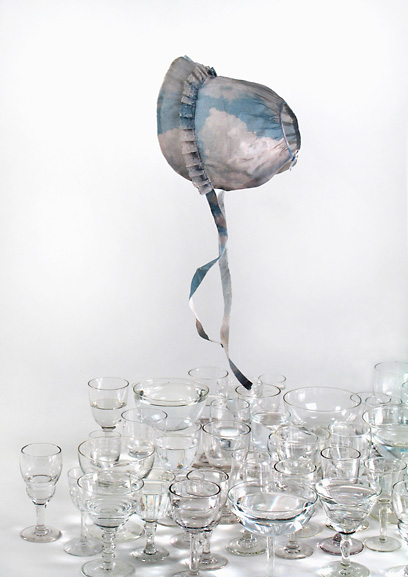
Shelly Goldsmith, Forming Vapour, 2005. 
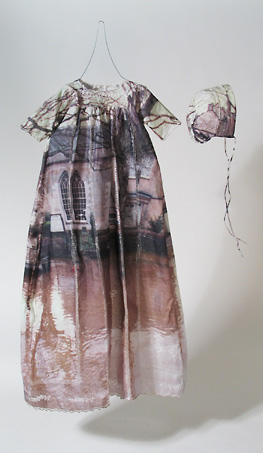
'Shelly Goldsmith is an artist who uses textile materials to interpret the emotions and memories associated with human experience. Using reclaimed garments, memories and stories are recalled, imagined and retrieved; witness to the ever evolving personal stories we all possess and carry around with us throughout our lives.' (http://www.caa.org.uk/members/new-members-september-2012/shelly-goldsmith/)


Baptism, Shelly Goldsmith, 2003


Shelly uses a range of materials that can relate with her work and are appropriate to her ideas. 

'I have used materials as far-ranging as silk, wool, glass and coal.'

(http://www.vam.ac.uk/content/articles/i/interview-shelly-goldsmith-textiles-artist/)

Shelly uses techniques such as weave, stitch and woven tapestry. 

'I would like to make a piece that extends the use of scale in my work. Generally I tend to work quite small, and I think this is due to lack of concentrated time in the studio over the last few years.  I would like to work on a large installation and/or commission.'
(http://www.vam.ac.uk/content/articles/i/interview-shelly-goldsmith-textiles-artist/)

I think the meaning and making of Shellys work is both very important to her. She states      'Process and making are very important to me, my work is underpinned by ideas or concepts.'
(http://www.vam.ac.uk/content/articles/i/interview-shelly-goldsmith-textiles-artist/)

The making of her art is meaningful. Dependant on what her idea is, decides on what fabric to use and experiment,explore and produce with. Their are also the meanings behind her work, such as emotions and memories her art triggers memories and personal stories!